Showing posts with label classics. Show all posts

Thursday, July 7, 2016

The Proper Attic Wife - "Good Greek Wives Stay In The Attic" - Ancient Light #2

With the title “Good Greek Wives Stay in the Attic” someone familiar with classical scholarship or ancient geography might think I am making a joke by referencing the attic, as an allusion to the area of Attika, the region which contained the great city of Athens. 
Fig. 1 The region of Attica. 

This is only partially the case. I instead, want you to think of the architecture of the home. Many ancient Greek homes were similar in that the house would have a second floor. In the classical Greek home, the second floor often looked up into the exposed slope of the rooftop. Many peoples in many places, have this kind of home. 
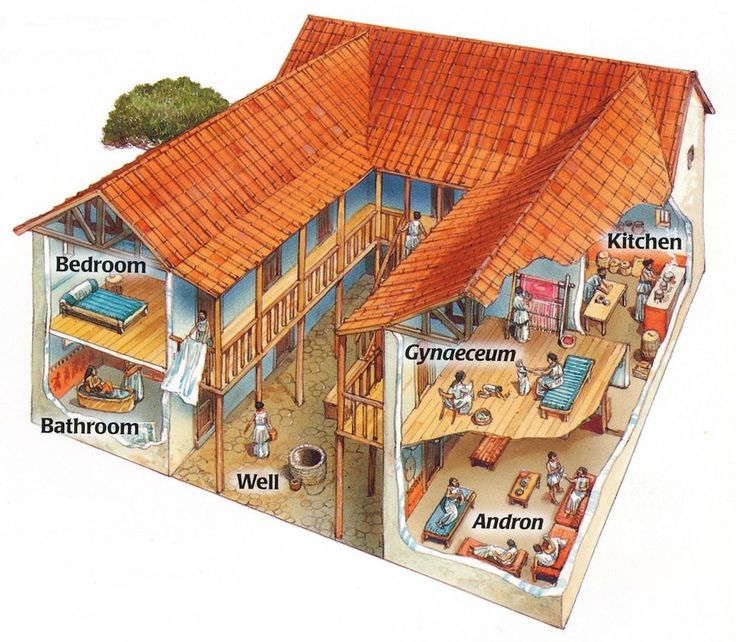
Fig. 2 An Imagining of a Classical Greek Home

When I was very young my mother read the series of books written by Laura Ingalls wilder, a narrative of prairie life. I remember they had a home which had a second floor, more like an exposed attic, and a ladder which led up to it. This is where the children slept.
Fig. 3 Loft-style cabin late 19th century U.S. frontier

In the classical Greek home, the attic was not only the sleeping quarters, but also often referenced as the woman’s quarters. This is where the good Athenian wife would spend most of her day. As a result of the lack of sun, the good Attic wife had white arms, while the man was often depicted as dark or tan. 
Fig. 4 From left to right: Hermes, Apollo, Zeus, Athena, Aphrodite, Ares. Men in black, women in white. 

The good attic wife was not seen at the Marketplace, but she spent her time with her domestic slaves spinning thread, mainly from wool, and weaving fabric. She might go to a nearby rural spring to bring back water with her domestic slaves. Even the evil witch, Circe, in the Odyssey, was found weaving on her loom like a spider building a web, by rapidly weaving her thread back and forth across her loom. Circe’s magic, was pharmaceutical based, by the way, and so would be, the magic of a devious wife.  
Fig. 5 Circe at her loom, Odysseus standing

Looking further at the architecture of the Classical Greek home you will see the standard outdoor courtyard(Fig.2). The good Attic wife could get plenty of air and light without being seen by other men. She would probably avoid too much sunlight if she wanted to maintain her white-armed appearance. Perhaps she would cover herself when necessary to avoid the burning gaze of Helios, another man by the way. The Roman’s did this with their famous Vestal Virgins. The lived behind highly secure walls in the symbolic center of the city. You could hear them sing and play from the outside, but you could not steal away their state assets. If you did, as you can guess, you would be executed. 
Fig. 6 Vestal Virgins tend the immortal fire of the god Vesta

Within preserved Classical Greek court arguments we can see a Greek wife lure her lover to her own home when the husband was out of the house. This shows that it was perhaps less risky to have the secret lover visit the woman, rather than risk having the proper Attic wife seen roaming about the city unattended, which would be quite the red flag so to speak. I once won an ancient Greek style mock trial at the University of Missouri by making an argument, part of which explained why I would “honorably” visit local Athenian prostitutes rather than dirty myself with my enemy’s wife. You have to be a little familiar with the classical Athenian culture to understand why that argument would work. 

The second floor as the woman’s quarters is highly significant for functional reasons. First, the man of the house could have other men visit the main floor, which also connected to the courtyard, and it was expected that all the females stay upstairs while another man visits. Historians, of course, do not believe this rule was absolute. Second, there are references to locks on the door which can prevent escape and access to the women’s quarters. In modern homes, we often have either multiple accesses to the second floor, or often a stairway which is open at the top and difficult to block off. Similarly, we often have a large yard, but our fences do not prevent penetration, nor conversation or eye contact between your non-Attic wife and a wandering man. The Classical Athenian man had the advantage of marrying, often in his 30s to a wife who was much younger.
Fig. 7 From "The Black Adder" Ep. 4 BBC 1983. The young Princess Leia of Hungary marries the much older Prince Blackadder. 

It seems they wanted the “purity” of their wives safe and secure. Men often wanted many babies from their young wife, and this might bring her own death quite early. The Male Athenian citizen would then require a fresh Attic wife. An Attic wife would be expected to live among the children produced by her older husband and female slaves under the legally recognized institution of the man of the household breeding with one or more of his female slaves, which produced more slaves, not legitimate Athenian citizens. In retrospect, perhaps the wife of the household was an honorable enough position, and perhaps, it was better in some cases to not be the main target of her husband’s affections. You know with all the female slaves and legal prostitutes in the city proper to keep him busy. With some marriages, this might be helpful. Imagine, the husband comes home drunk and calls for his wife. The wife sends down a female slave… and goes back to bed. 

---

[Video] "Good Greek Wives Stay in the Attic" Ancient Light #2 Live at SpoFest, Cafe Blackadder, Warrensburg, Missouri, U.S.

Tuesday, May 24, 2016

Mine Slave - The Dark Side of Ancient Light [Haiku


Mine Slave - The Dark Side of Ancient Light [Haiku & History]


 Life in the light deny
 Moving closer to Hades
 Inching day by day

There were ancient slaves who were like family members, but there were slaves whose youth were wasted away in the mines, extracting precious metals, usually for a king or city, who often hire a contractor to supply the labor. This contractor could harness and hire large amounts of slaves for major projects. In many ways, the ancient world was built on the backs of slaves.

Saturday, May 14, 2016

Fresh Slave - The Dark Side of Ancient Light [Haiku


Haiku & History Day Six "Fresh Slave"


Fresh Slave - The Dark Side of Ancient Light [Haiku & History]


 A pretty young thing

 Last Seen wandering the coast

 Father calls her name


Slavery could be a lucrative trade, even for those who do not specialize in it. One could kidnap a pretty girl and sell her for a pretty penny. The Greek classical tradition is filled with abduction scenes, often near the coast. Then again, ancient Greek life was hardly ever far from the sea. Those landlocked Arcadians might disagree.

Friday, May 13, 2016

Coward on the Front Line - The Dark Side of Ancient Light [Haiku


Haiku & History Day Five!

Coward on the Front Line - The Dark Side of Ancient Light [Haiku & History]


Coward on the Front Line


 Blamed for all their deaths
 You could not hold the front line
 How do you still live?


Most Greek hoplite warriors were farmers. Spartans were an exception, they lived in the barracks, professional full-time soldiers. The front line of the phalanx, and the entire unit, would be fellow landholders in one territory. You would be serving with your fellow countrymen, people you have known your whole life, your neighbors and relatives. In phalanx style combat, the front line must hold against the enemy to prevail in the initial stage of battle. To break a unit, is to crash the front line and divide the unit in to smaller parts to be picked off of who will retreat in disarray. It is then that the cavalry often chase those fleeing, or the battle for that war season was over as the enemy fled back home to prepare for the harvest season. If the front line doesn’t hold, and a member of the front is alive while everyone else dies, this might be met with suspicion.

Thursday, May 12, 2016

Captured City - The Dark Side of Ancient Light [Haiku & History]


Haiku & History day four!


Captured City - The Dark Side of Ancient Light [Haiku & History]


 A Morning battle

 Husband brothers, and sons dead

 Girls await shackle


After a battle, the victor would often slay all the men and haul off the women and children to sell into slavery.


War & ancient combat, slavery.


Hosted by Steve Dotson

Wednesday, May 11, 2016

Spartan Sword - The Dark Side of Ancient Light [Haiku & History]


Haiku & History Day Three!!

Spartan Sword - The Dark Side of Ancient Light [Haiku & History]

The short Spartan sword
Why is it so small you ask?
Easy to reach heart

The Spartans had their own style of sword they carried, which was slightly shorter than the norm. Spartans are often illustrated with a Macedonian style sword, one which has a slight curve. The Spartan blade we are discussing was straight and short. Since Greeks specialized in phalanx combat, the spear was the main weapon in such a battle. The sword was an important weapon to draw after the initial clash when the two sides are in chaos and inside of spear range. One could draw the sword while his hoplite shield was pressed against the enemy. If your sword was too long, you would not be able to draw it and use it to drive under the opponents armor into their vitals.

Tuesday, May 10, 2016

Parthian Shot - The Dark Side of Ancient Light [Haiku & History]


Haiku & History Day Two!

Parthian Shot - The Dark Side of Ancient Light [Haiku & History]


The Parthians Flee

Turning round on their saddles

Pull bow release soul


The Parthian shot, a parting blow. A famous term for a strike made as someone retreats. The Persian Parthians had a horse riding warrior who would motivate the rapid advance of an opponent by retreating on their horses. As the enemy advanced into the vacuum of the retreat, the Parthians would turn their torsos as their hips and legs continued to hug the charging horse, and fire their arrows into the rapidly advancing enemy. The enemy and arrows are both flying toward each other, an advanced combat technique indeed. In striking arts, one uses a trick where he gets the opponent to duck right into an uppercut. The head meets the hand in one powerful moment of impact.

Saturday, May 7, 2016

Scythian Sniper - The Dark Side of Ancient Light [Haiku & History]


What did the Athenians hire the ancient sharpshooters in the north to do? Find out with a little haiku & history. Grab a cucumber sandwich and a glass of lemonade, but hurry, it will be over all too soon! It is a short video.

Friday, April 29, 2016

Ancient Light #10 Why We Seek Someone Else To Feel Complete [Plato's Gen...


Ancient Light #10 Why We Seek Someone Else To Feel Complete [Plato's Gender Creation Myth]


Ancient history & classics themed series presented by history professor, Steve Dotson.

Ever wonder why you feel incomplete? Do you know we are actually only a half of one person, craving to find the other half? You were once one. Search your heart and you will know this is true. As a whole person, humans were once wise and powerful. You once had four arms and four legs, you had two heads. You could use your multitude of limbs to move quickly in any direction by a rolling movement which also produced amazing power. We thought we could rival the gods and Zeus took out his wrath on us, cutting us in two. You have male and female traits, and there is someone else walking around who has an exact combination of male and female traits to balance out your own. This is why we always search for someone else to make us complete. This also explains the great variety of desires among human kind, as one searches for their own unique opposite. Perhaps this could serve as an explanation for transgender issues. But, even more important to understand is the threat that was made if we should continue to defy the gods. In our modern age, some even deny that the gods exist or confidently claim that there is only one god. Humans, in the past two hundred years having been growing too strong, and even taking on the abilities of the gods for themselves: long distance communication, flight, hurling weapons from the heavens, and other scientific advancements. Zeus has already given us a warning if we are to rival the gods again. 

Ever see the musical or movie-musical ‘Hedwig and the Angry Inch’? If you haven’t I wont spoil it for you. It is the story of a rock star “Hedwig” who was the victim of a sex-change operation gone bad. Just watch the movie, you will never forget it, and many of you will discover a new favorite film. One of the musical numbers is an animation of an ancient myth from Plato’s book Symposium. The myth tells of how humans were once complete. Plato has the dead playwright Aristophanes tell his own creation myth, as a way to explain the nature of love. The creation myth is quite fantastic, but when the individual components of the story are broken down, we have a complex theory which addresses the complexity and longings of human existence. By the end you probably be able to determine from which proto-human species you came, and there are three: sun, earth, and moon.

What is symposium? Sum pinein - “to drink together” 

The story: we were originally three genders. Male, female, and androgynous. The word androgynous is made of the Greek words for man and woman, the androgynous one contains both of the sexes. The three genders were more complex than today. Of the three entities they were known as children of the sun, earth and moon. The sun children were made of two men, the earth children were made of two women, and the moon children contained male and female parts. Everyone had two heads, which could do two things at once. How many times have you felt like you should be doing more than one thing at a time, we were better multi-taskers. We had four arms and four legs, we must have looked like some depictions of a Hindu god. As of now, you should be able to ascertain that we had double of everything. With our ability to multitask, enhanced brain power, super speed and momentum, we became too proud and began to rival the gods. The gods thought about killing them with thunderbolts, like they did to many of the giant-race of Titans, really their fathers and mothers. Instead, Zeus made use of them as tools of worship, but first he had to weaken them as well as punish. He decided to cut humans in two, so they loose their great advantages. Humans from then on, walked and moved about, with only two legs, two arms, and one head. It is at that point we began to seek others to embrace, kiss, copulate, and a desire to not be alone. But, wait, we were still not the exact physical form we are today. After a while, the text does not say how long, Zeus took pity on mortals, as he watched them attempt to join with each other physically, he came up with a helpful aid for these awkward humans. He made one more anatomical adjustment. Instead of the genitals hanging off the side of the body, like it once did, god moved the genitals of the man and the woman to their front and middle. This way, humans could now join together in copulation while they embraced, kissed and sank into each other’s eyes. Perhaps this is about the time the Kama Sutra needed to be invented. Humans would have to invent new bedroom habits. The physical repositioning must have been very helpful. Acts of love making, with one’s genitals hanging off the side of the body, probably killed most of the intimacy.

Sunday, April 24, 2016

Ancient Light #9 How to Speak to the Dead. The Nekyia. #Paranormal


Ancient Light #9 How to Speak to the Dead. The Nekyia. #Paranormal #GreekClassics


Ancient history themed podcast presented by Steve Dotson, history professor. In this episode, we are exploring book 11 of the Odyssey and the occult knowledge it contains. The last part of the show is a reading in the original Greek.

Topics in this episode: Necromancy, Ancient History, Greek, Homer, Nekyuia, Odyssey, Teiresias, Circe, Elpenor, mythology, ritual, ghosts, underworld, Hades, sacrifice, blood, magic, magick, occult, ceremony, classics, paranormal.

To follow along in the Greek: http://www.perseus.tufts.edu/hopper/t...

Odyssey XI. 20-58
In the Odyssey book ten lines 20-58, we are given a glimpse of a Homeric metaphysics of the dead. It is difficult to say if this specific ritual was a real procedure or only a manifestation of oral tradition. The academic study of ritual and religion is particularly enriched by the detailed procedure to evoke, and Odysseus’ interaction with, the dead in the underworld in these passages. The ritual power of fresh blood and the promise made by Odysseus to sacrifice more in the future is nicely illustrative of ancient ideas about the function of blood in ritual. One of the great points about this selection is that the sacrifice is not a customary sacrifice made to a well-known god. Blood does more than please the ambrosia eaters, it holds a power and value throughout the worlds of the non-mortal it would appear through my reading of my translation. Blood seems to give the dead a temporary taste of life force. It is ethereal heroin so to speak. The ritual specifications, ingredients, and corollary instructions from Circe create a detailed set of religious or mythical structures that open up many helpful hints and queues many questions about ancient Greek ideas regarding the afterlife and the nature of one’s non-physical form or soul. 

English Trans. S Dotson. Hom. Od.11.20-58
11.20 Then coming to a spot, we beached our ship and took out the sheep
11.21 We were going to the current of Oceanus
11.22 until we are to arrive at the place which Circe told us.
11.23 There Perimedes and Eurylochus held the sacrificial victims.
11.24 I drew my sharp sword from my thigh and
11.25 dug up a pit a great as a cubit from here to there,
11.26 around it I poured a libation to all the deceased,
11.27 first with mild and sweet wine
11.28 the third with water, sprinkling it on white barley-meal.
11.29 I was making much entreat to the powerless heads of the dead:
11.30 when I go to Ithaka, I will throw a barren cow, she being one of my best,
11.31 onto the sacrificial pyre and fill it with goods,
11.32 and to Teiresias alone I will sacrifice separately a ram,
11.33 all black, who was our most outstanding of our fold.
11.34 Then with those vows and prayers, there to the dead,
11.35 I had made my entreat, taking those sheep, I cut their throats
11.36 into the pit, and dark clouds of blood flowed.
11.37 The spirits of the dead gathered out of Erebus;
11.38 young married women, youth, unfortunate old men, tender
11.39 female virgins having endured sorrow in their hearts,
11.40 and many who have been wounded by bronze tipped spears,
11.41 men killed in war, with their armor splattered in blood,
11.42 the multitudes roamed wildly about the pit form one place to another
11.43 with an unspeakable cry. Pale fear was beginning to take me
11.44 there and then I called, rousing my companions with the sheep,
11.45 Those sheep which lie there having been slaughtered with the pitiless bronze,
11.46 to cleave and flay them, and to make prayer to the gods,
11.47 to mighty Hades and dread Persephone.
11.48 I myself drew my sharp sword from my thigh
11.49 and sat. I did not allow the powerless head of the dead
11.50 to go nearer to the blood, until I had inquired of Teiresias.
11.51 The first soul to come was my companion Elpenor,
11.52 for he had never been buried under the broad-wayed earth,
11.53 for we left his body in the hall of Circe
11.54 unlamented and unburied, since another task urged us on.
11.55 When I saw him I took pity in my heart, crying, 
11.56 and I began speaking, addressing him with winged words.
11.57 "Elpenor, how did you come from beneath the underworld?
11.58 Coming on foot, you have been faster than me with my black ship."

Thursday, April 21, 2016

Ancient Light #7 Jesus & Julius Caesar (Hard C & Sneaky J)


Ancient history themed podcast presented by Steve Dotson, history professor. "This episode is a satirical and informative look at the evolution of language. I tried a conspiratorial tone for this one."


Topics: Languages, Ancient Greek, Latin, English, Spanish, German, Hebrew, Jesus, Julius Caesar, Satire, Classics.

Tuesday, April 19, 2016

Ancient Light #8 Who are the Gods You Serve? #Plato


Ancient Light #8 Who are the Gods You Serve? Plato & Personification

Ancient history themed podcast presented by Steve Dotson, history professor. An explanation & exploration of Plato's Theory of Forms & "Holy" Personification. 

Topics in this episode: Plato's Theory of Forms, personification, mythology, religion, literature, Neil Gaiman, Oprah, philosophy, poetry, Martin Heidegger, phenomenology & literature

Link to an earlier performance of the larger poem 'Young Gods' performed live at a SpoFest event in Montserrat Vineyards, Montserrat, Missouri, 2013. The wind was occasionally blowing into the microphone, so it isn't the best quality. Was that you Zephyr? https://youtu.be/WfbzpfXkR7U

Here is the text of the poem at the end of the show

'Young Gods' excerpt

A well known god is known through the ages
New gods born as old gods needs forgotten
Even the offspring of a god and human
are born then die a final breath goodbye
But the children of the union of gods
can only rise and descend never die
The Immortals, once born never vacant
but after their turn home is in Hades
Roaming the back of the minds of mortal
Shadow of the active gods on the earth
Young gods defining the state of the age

As the long-lived can tell you this one truth
The bastards of gods born from mortal womb:
Herakles, Percy, Alex and the Christ
Saw the old Zeus once young once purveyor
Our Olympic heritage from his sire
Zeus long gone from mortal realm remembered
His corpse named Jupiter now well preserved
During the rise of the strong roman hand
And so they did to the corpse of the Christ
Once martyred man Jesus, now sovereign 
Images of old gods used as puppets
The operator moves the lips and speaks
The deathly appearance not out of place
When the paint fades from the eyes of Greek statue
The image conveys a gaze of blank stare

Not to ramble on about Zeus once young
But must needs him so you can soon relate
ushered in the demise of old Chronos
The old gods who bore their own replacement
Homer in his time tells of Zeus in prime
The days of the blind poet would ne'er see
Old thunderbolt on Olympus skyline
For Mount Ida reared god burying Zeus
Had long descended as man found rust
And melted it into swords and the plow
Old kings turned over in ancient dark age
His offspring Ares spread war and grew large

But who told the humans that Zeus was gone?
Even the gods know the truth of worship 
The religion of mortals always behind
They advance as a whole with the new gods
Having only known the names of the old
Apollo and Perseus wander the realm free
Smelling the perfume of the sacrifice
No matter the name attached to the smoke
The sounds and scent arouse the active gods
Is this sacrifice all that they require?
one may be well informed to know our task
The new god bids change and we rearrange
To know the living gods look around
What law dominates? What new advancement?
What conflicts loom? What new plow to till earth?
How are humans defying nature now?
Therein lies the study of the new gods